Creativity & Composition
Unlocking the Imagination Through Music Literacy
Creativity isn’t just about coming up with something new. It’s about seeing possibilities — and having the tools to bring them to life.
In music, creativity often begins with inspiration: a phrase that floats through the mind, a rhythmic idea tapped on the table, a feeling that demands expression. But without a way to shape that inspiration, the creative spark can fizzle out. That’s where music literacy becomes essential.
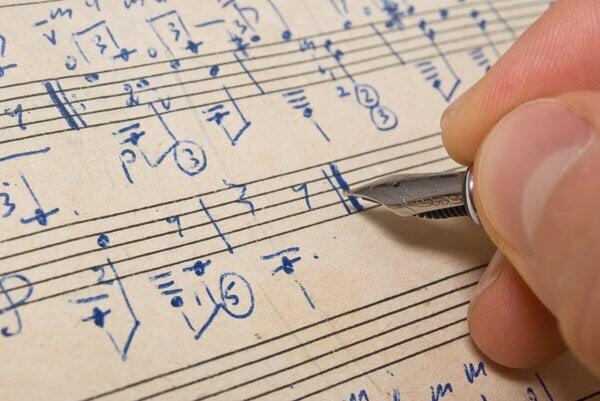
Music literacy gives form to inspiration. It helps musicians move from “I have an idea” to “Here’s what it sounds like,” and eventually, “Let me show you.” Whether it’s composing a melody, arranging a familiar tune, improvising with structure, or writing an entire score, the ability to read and write music allows creativity to expand — not shrink.
In this chapter, we explore how music literacy empowers students and adults alike to engage with music creatively: to compose, to arrange, to imagine, and to make music their own.
Creativity Needs Structure
There’s a common misconception that structure limits creativity. That if we teach students theory, form, and notation, we’ll somehow stifle their originality. But the opposite is true.
Structure doesn’t hinder creativity — it supports it.
Think of a poet: their words become more powerful, not less, when they understand rhythm, meter, and metaphor. A dancer becomes more expressive by knowing how to use space and timing. In the same way, a musician becomes morecreative when they understand the tools of composition — when they can read a musical phrase, manipulate its rhythm, alter its harmony, and build something new from something known.
Music literacy gives musicians access to:
- Melodic development – creating and expanding themes
- Harmonic understanding – choosing chords that reflect mood
- Rhythmic variation – exploring feel and energy
- Formal structure – shaping ideas over time (ABA form, rondo, etc.)
- Notation and editing – writing ideas down clearly and refining them
These tools don’t replace creativity. They channel it. They allow musicians to take that small moment of inspiration and build it into something lasting and meaningful.
The First Composition: A Rite of Passage
One of the most powerful moments in a music student’s journey is composing their first piece. It might be short, clumsy, or even a little strange — but it’s theirs. That moment — when a student plays something they created from scratch — is often more empowering than any recital or exam.
Students who read music gain the ability to:
- See how other composers think
- Borrow forms, techniques, and motifs
- Notate their own ideas clearly
- Share their music with others who can perform it
- Reflect and revise with intention
Imagine an 11-year-old writing a lullaby for their little brother. A teenager composing a piece to say goodbye to a close friend. An adult learner scoring background music for a family slideshow. These aren’t hypothetical — they happen every day in music studios and classrooms where students are taught to see music as something they can both interpret and create.
Without literacy, a musical idea can feel fleeting and hard to hold onto. With literacy, it becomes tangible — something you can return to, revise, and share.
Improvisation and Freedom Within Form
Creativity in music isn’t limited to composition. Improvisation — spontaneous musical creation — is a vital part of human expression, from jazz and blues to Baroque ornamentation, gospel ad-libs, and traditional folk melodies.
Some believe that music literacy stifles improvisation, that “reading players” can’t improvise. But this idea misses the point.
Improvisation and music literacy are not opposing forces. They are complementary skills.
When a musician understands form, key, harmony, and rhythm, they can improvise with clarity and depth. They can choose when to follow the rules and when to break them. They can hear a chord progression and respond with intention — not just intuition.
A musically literate improviser can:
- Navigate chord changes more confidently
- Shape solos with dynamic form
- Play more freely in ensembles
- Communicate ideas more clearly to collaborators
- Transcribe and study solos they admire to deepen their vocabulary
In fact, many of the world’s greatest improvisers — from Charlie Parker to Oscar Peterson — were intensely trained in theory and literacy. They used their understanding not to limit themselves, but to push further.
Arranging, Reimagining, and Making Music Your Own
One of the joys of music literacy is the ability to take existing material and reshape it. Students who can read music are able to:
- Change a song’s key to better suit their voice
- Rearrange a solo piano piece for a duet
- Add their own introduction or ending
- Simplify complex rhythms or harmonies
- Create versions of songs for specific events or people
This is creative ownership — not just repeating music, but reimagining it.
In a world filled with covers, remixes, and reinterpretations, the ability to rearrange music thoughtfully is both a practical skill and an artistic freedom. Music literacy turns a performer into a collaborator — someone who interacts with the material rather than just copying it.
This is especially valuable for teachers, students in small studios, and families making music together. The ability to adapt music to real-life situations, instruments, and emotional contexts is a gift that keeps on giving.
Creative Confidence Through Literacy
One of the greatest benefits of music literacy is not just the work students produce — but the confidence they gain in doing so.
When students see that they can write something down, that others can read and play it, that they can create something beautiful out of nothing — they begin to believe in their creative capacity.
That confidence spills over into other areas of life:
- Speaking up in class or at work
- Taking creative risks in art, writing, or problem-solving
- Sharing ideas with peers
- Seeing themselves as capable of originality and contribution
In a world that often values consumption over creation, music literacy quietly nurtures creators—people who think for themselves, imagine new possibilities, and bring ideas to life.
Inspiring the Next Generation of Composers
Many of today’s young composers and songwriters began their journey not in conservatories but in living rooms, practice rooms, and music studios where they were encouraged to read and write from the start.
Some of them will go on to write film scores, video game soundtracks, orchestral works, or original worship music. Others will compose for fun, for friends, for family milestones, or for healing.
All of them will have something in common: they were given the tools and permission to create.
That’s the power of music literacy. It doesn't promise greatness. It invites creativity. It says: “You can do this. You don’t have to wait for someone else to write the music you want to hear.”
Conclusion: Literacy as a Launchpad for Imagination
Creativity lives in every person. But it needs soil to grow in—structure, support, and skill. Music literacy provides that soil.
It gives aspiring musicians and lifelong learners the language and tools to express what they imagine, to compose what they feel, and to share what they create. It removes the ceiling placed by guesswork and opens up a lifelong playground of possibility.
Whether you are writing your first melody, rearranging a familiar tune, improvising over a chord progression, or composing for a concert hall, music literacy is the bridge between your imagination and the world.
"It is not the end of creativity.
It is the beginning."